

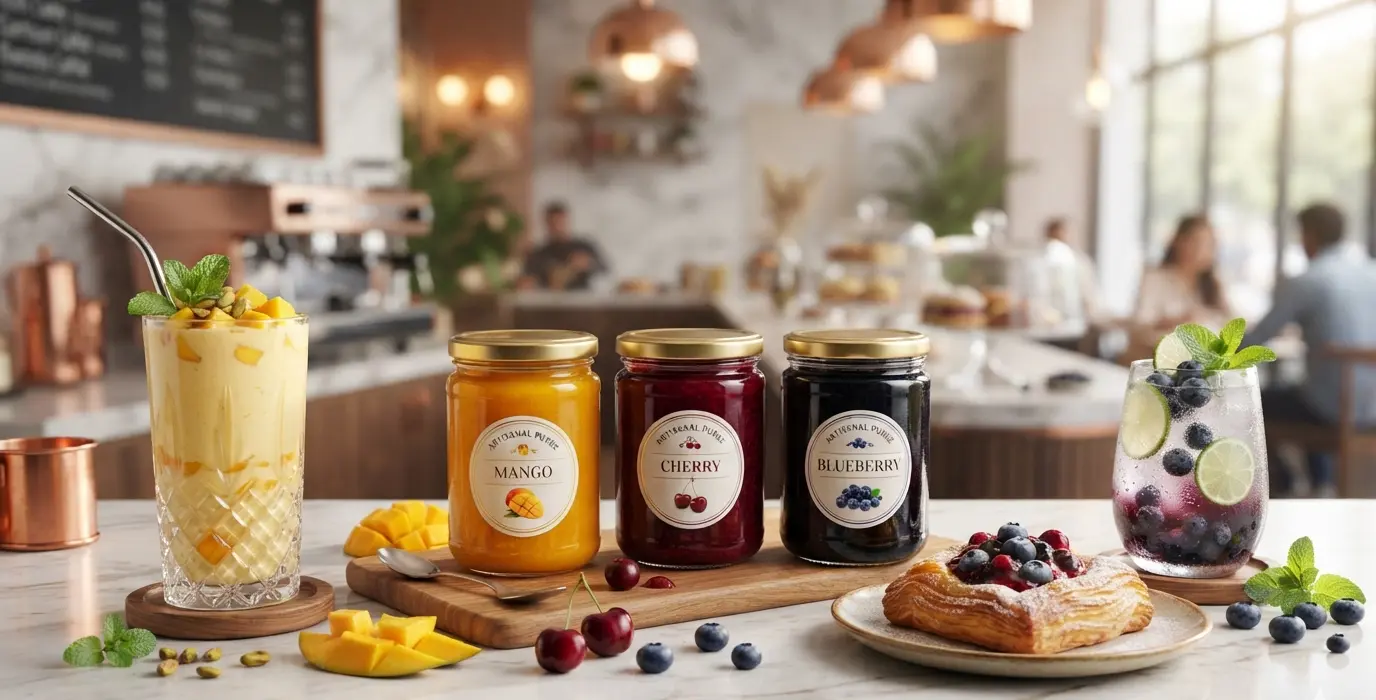
The One Ingredient Swap That Saves Cafés Lacs Every Season
Fruit Paste for Cafes Pakistan the owner in knows this cycle. Mango season shows up, prices are decent, menu looks great. Three weeks later mandi rates jump 40%, your supplier starts sending half-ripe stock, and your kitchen boy is standing over a pile of fruit trying to peel, deseed, and blend enough mango pulp for tomorrow’s rush — while today’s orders are still backed up.
Then mango season ends. And your bestselling mango lassi, mango mousse cake, and mango mocktail just… disappear from the menu for eight months.
This is the exact problem fruit purees were built to solve. Not the diluted, syrup-loaded “pulp” sold in loose bazaar packaging — proper, single-ingredient fruit paste that behaves the same way in January as it does in June.
If you’re running a café, bakery, mocktail counter, or catering setup anywhere in Pakistan, this guide walks through what fruit purees actually are, why commercial kitchens are quietly switching to them, and how to work out the real cost math for your own menu.
What Exactly Is Fruit Paste for Cafes Pakistan (And Why It’s Not the Same as “Pulp”)
A fruit puree is fruit that’s been washed, deseeded, cooked down, and blended into a smooth, concentrated paste — no added water, no artificial thickener doing the heavy lifting. What you’re left with is essentially the fruit itself, just shelf-stable and ready to scoop.
Compare that to what most local suppliers call “pulp”: often watered down, inconsistent from batch to batch, and packed with preservative levels that vary depending on who mixed it that week. One tub tastes strong, the next tastes like flavored water. For a café trying to keep its lassi or mocktail recipe consistent, that inconsistency is a silent business killer — regulars notice when their favorite drink tastes “off” one week.
Good fruit paste, on the other hand, is measured in Brix (sugar-fruit concentration) and stays consistent tub after tub. That consistency is the whole point — your barista scoops the same amount, gets the same taste, every single time, whether it’s Ramadan rush or a slow Tuesday.
Moreover fruits are known for their vitamin A and vitamin C content, both of which support immune and skin health, according to Healthline’s detailed look at mango nutritionl. As a result, Mango Fruit Paste allows businesses to market indulgent drinks with genuine nutritional value.
The Real Cost of Using Fresh Fruit in a Commercial Kitchen
Let’s be honest about what fresh fruit actually costs a café — not just the mandi rate, but everything around it.
- Prep labor. Someone is peeling, deseeding, and blending fruit every single day. That’s paid hours that could go toward service instead.
- Spoilage. Fresh mango, cherry, or berries don’t wait for you. Order too much and it rots in the fridge by the weekend. Order too little and you’re out of stock mid-shift.
- Seasonal price spikes. Cherries and apricots have maybe a 6-8 week window in Pakistan. Outside that, you’re either paying import-level prices or dropping the item from your menu entirely.
- Inconsistent quality. Not every crate from the mandi is equal. Some days the mangoes are perfectly ripe, some days they’re stringy or sour, and your final product suffers for it.
A 1kg tub of frozen fruit paste, by comparison, has a shelf life that runs for months when refrigerated and holds its flavor whether it’s peak garmi in July or a slow winter month. You buy once, portion as needed, and there’s zero mehmaan-embarrassing moment where the fruit you needed just isn’t available.
Where Fruit Paste for Cafes Pakistan Actually Get Used in a Pakistani Menu
This isn’t a niche ingredient — once kitchens start using it, it shows up everywhere:
For Cafés and Mocktail Bars
Mocktail ingredients built around real fruit paste — mango mojito, blueberry fizz, cherry cooler — taste noticeably better than the neon-syrup versions most roadside setups serve. Guests can tell the difference, especially the ones who’ve traveled or eaten at proper five-star lounges.
For Bakeries and Patisseries
Cake fillings, mousse layers, glazes, and fruit tart toppings all need a smooth, spreadable base — exactly what puree is built for. It also blends cleanly into buttercream without turning the texture watery, which fresh fruit almost always does.
For Home Bakers Scaling Up
If you’re running a home bakery on Instagram orders and thinking about wedding season bookings, a stocked freezer of mango and cherry paste means you’re never turning down an order because “abhi season nahi hai.”
For Lassi and Beverage Counters
Mango lassi is a menu staple 12 months of the year in most Pakistani cafés — but real mangoes are only around for a few months. Paste-based lassi keeps the item on the menu (and profitable) year-round.
The Nowshera Bazar Fruit Paste for Cafes Pakistan Range
We supply commercial kitchens across Pakistan directly from our Karachi manufacturing base, with orders coordinated through our Nowshera logistics hub. The current lineup covers the flavors that move fastest in cafés and bakeries:
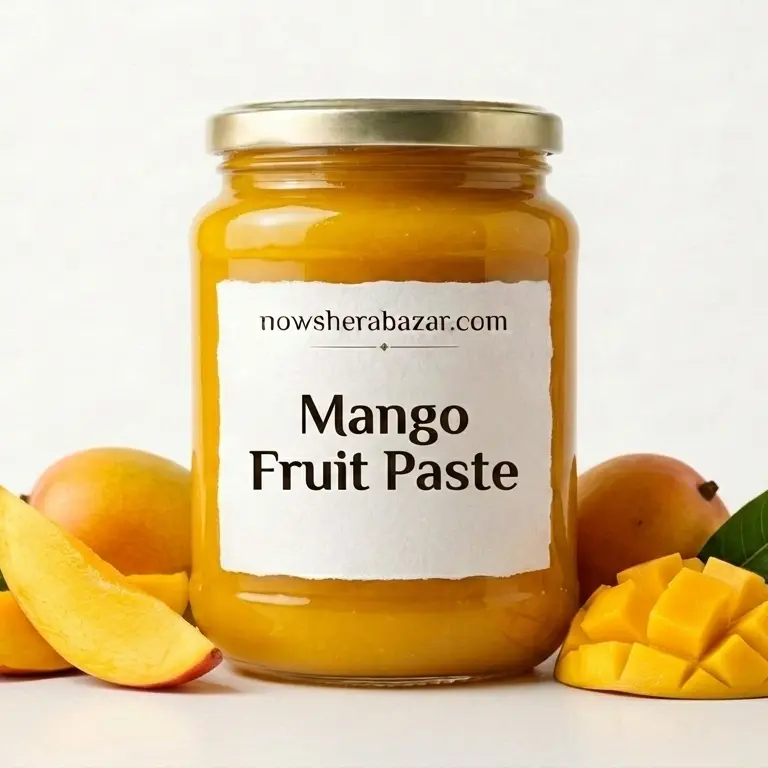
- Mango Fruit Paste — the highest-demand SKU on our list, used in lassis, mousse cakes, and mocktails
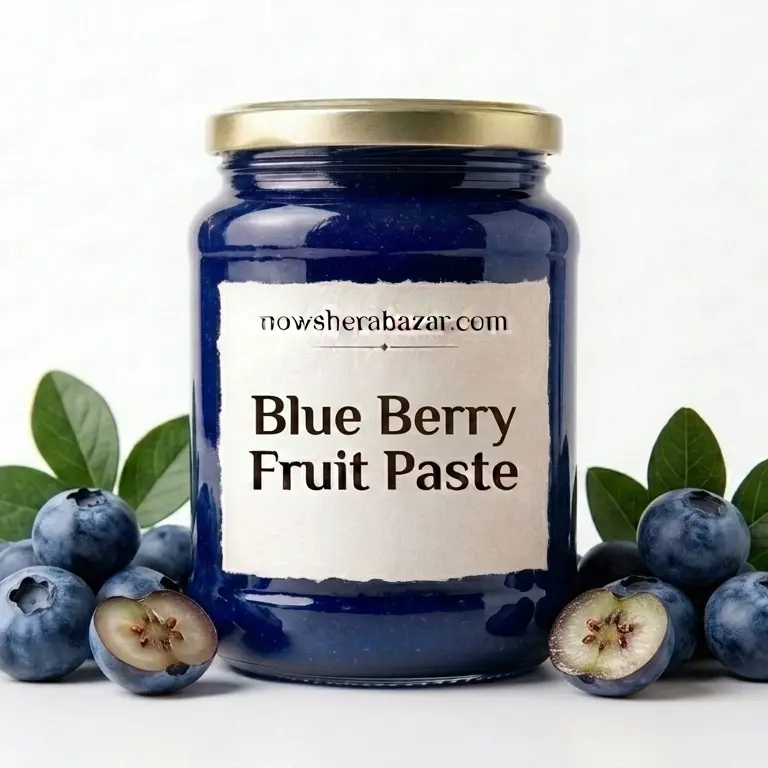
- Blueberry Puree — for glazes, cheesecakes, and berry mocktails
- Apricot Paste — a flavor that’s genuinely hard to source fresh outside its short season
- Cherry Puree — for drinks, toppings, and dessert plating
Pricing runs roughly ₨ 4,400 to ₨ 4,700 per kg, depending on flavor and packaging size — a fraction of what most kitchens spend once you factor in fresh fruit wastage, labor, and off-season sourcing headaches.
Doing the Math: Fruit Paste for Cafes Pakistan vs. Fresh Fruit
Take a mid-size café doing 30 mango lassis a day during peak season. Fresh mango sourcing means daily mandi runs, someone dedicated to peeling and blending, and inconsistent taste depending on that day’s batch. Multiply the spoilage from unsold or overripe stock across a month, and the “cheaper” fresh fruit option usually isn’t cheaper at all — it’s just a hidden cost split across labor, waste, and inconsistency.
A kilo of mango paste, portioned properly, stretches across dozens of servings with zero prep time and zero waste. For a kitchen team already stretched thin during rush hours, that’s time back on the floor instead of behind a cutting board.
How to Order — No Website Checkout Needed
We built our ordering process around how Pakistani businesses actually communicate: WhatsApp. No account creation, no long checkout forms. Message us your required flavors and quantities, and our team confirms pricing and dispatch from Karachi, with local coordination through our Nowshera team for faster turnaround in the north.
For cafés and bakeries planning ahead — especially with wedding season and Ramadan/Eid rush coming up — it’s worth stocking a few kilos ahead of time rather than scrambling once demand hits.
Frequently Asked Questions
How long does fruit paste last once opened? Kept refrigerated in a sealed container, most purees hold quality for several weeks after opening. Unopened and frozen, shelf life extends much longer — ask our team for exact figures per flavor.
Can I use fruit puree in both hot and cold applications? Yes. It works in baked fillings, hot reductions, cold mocktails, lassis, and frozen desserts without losing flavor or texture.
Is fruit puree suitable for small home bakery orders, or only bulk commercial buyers? Both. We supply home bakers scaling up their order volume as well as full commercial kitchens ordering in bulk.
Do you deliver fruit purees across Pakistan or only in Karachi and Nowshera? Our fruit purees and other commercial kitchen supplies ship nationwide from our Karachi base. Local Nowshera Cantt orders can also be coordinated through our delivery service for faster same-area turnaround.
Ready to stock your kitchen for the season ahead? Message us on WhatsApp for current stock, flavors, and bulk pricing on mango, blueberry, apricot, and cherry fruit paste — delivered wherever your café, bakery, or bar operates in Pakistan.